Guide: Are You Actually An AI Company?
This guide helps founders, operators, investors and curious bystanders check whether a business has truly shifted because of AI or has mainly upgraded its vocabulary. AI Forward is also valid if conditions are met.

Are You Actually An AI Company?
A light check for separating “we use AI” from “our business has actually changed in a meaningful way.”
If the sign changed but the work, product and revenue did not, you may be an old company with a fresh sticker.
What this guide helps with
This guide helps founders, operators, investors and curious bystanders check whether a business has truly shifted because of AI or has mainly upgraded its vocabulary. It is satirical in tone, but the underlying questions are useful in boardrooms, team meetings and comment sections alike.
Why now
The AI label is spreading across every industry, some of that is real, some of it is adjacency. When the language gets very crowded, a simple test helps keep people from confusing tool adoption, marketing enthusiasm and actual business-model change.
The pattern
The pattern is that story moves faster than structure. A company can sound radically different before its product, revenue engine, cost base or customer behaviour has changed in any serious way.
The check
If the answer is still “banking”, “logistics”, “consulting” or “retail”, that is not a problem, it is just clarity. The next question is whether AI changed what is sold, how it is delivered or what customers are willing to pay for. If not, the AI story may still be a supporting detail rather than a new corporate species.
A real shift usually becomes visible to the customer. For example, maybe turnaround time falls sharply, a new self-service capability appears or a product becomes meaningfully more adaptive. If the customer experience barely changed, the company may have improved internally without necessarily becoming “an AI company”.
Does AI create a new revenue stream, a defendable capability or a structural margin change, or is it mainly a tool cost added on top of existing work? A firm that buys AI tools may become more efficient. A firm that builds a new economic engine around AI is making a stronger claim.
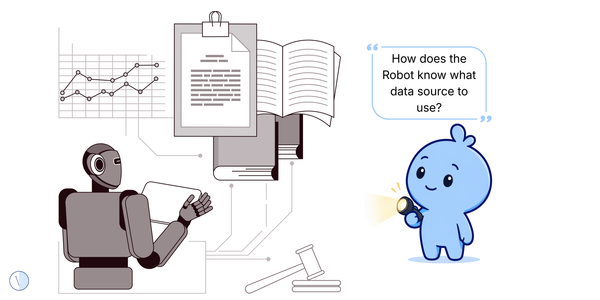
Is the company doing something distinctive with data, workflow design, product integration or model use, or is it mostly consuming the same general tools as everyone else? Buying a tool is normal but building a capability around it is the harder and more meaningful part.
Real shifts usually leave fingerprints in the org: new roles, different review work, different operating controls, different products or different decision rights. If only the website changed, the identity shift may still be in beta.
A retailer using AI to improve product descriptions is AI-enabled. A company whose product fundamentally depends on AI behaviour to work is closer to AI-native. Both can be valuable, but they are not the same category, and the difference matters when the market gets carried away.
The point of this check is not to shame companies for using AI. It is to tell a more precise story. Sometimes the strongest position is simply: we are not an AI company; we are a better company because we use AI in ways that actually matter.
Quick examples
| Situation | Better question |
|---|---|
| A bank uses AI in operations | That may make it a better bank. It does not automatically make it an AI company unless the product, economics or customer promise changed in a deeper way. |
| A retailer adds AI search to the site | Useful. The next question is whether this changed the customer proposition or mostly improved one part of delivery. |
| A consultancy rebrands with AI language | Ask whether the work itself changed or whether the same service is now wearing a new outfit. |
| A software product now depends on AI outputs to function | That is a stronger case for an AI-native shift because the product behaviour itself now relies on AI. |
The Satire
If the coffee shop adds two AI Agents and rebrands as frontier beverage intelligence configuration company, please ask one more question.
Related Vieews paths
Chaos scenes spot the contradiction. Signals name the pattern. Guides give you the next simple move.
Chaos
The Blue Blob and the AI Sticker
The discovery scene that started this thread.
Signal
AI Adjacency Identity Inflation
Use the signal when you want the pattern named clearly.
Playbook
AI Value Ledger
Use the heavier structure when you need the deeper lens.
Useful context
This guide is not anti-AI. It is anti-fuzzy labels. Clear language helps companies, workers and audiences know what actually changed and what simply received a shinier sticker.
These are Vieews, not bibles, use as basic lenses, not prediction, investment advice, or a replacement for doing your own investigation. If a line makes the spreadsheet uncomfortable, excellent, ask one more question, tug on that thread (don't get fired!).