Guide: Token-to-Value Outcome
Token usage is a meter because it tells you something happened. However, it does not automatically tell you whether the thing was useful, repeated, trusted or worth paying for.
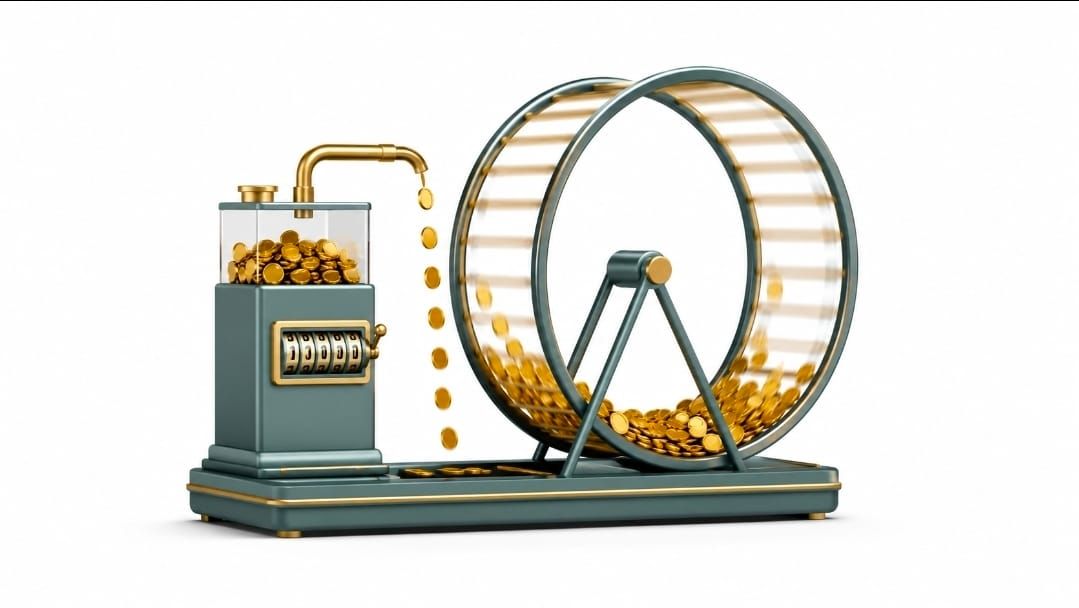
Token-to-Outcome Guide
A practical check for connecting AI usage, tokens and cost to actual work outcomes before the dashboard starts celebrating itself.
The goal is not less AI, the goal is less magical thinking around what AI usage means.
Use this when
Use this when token consumption, AI calls, prompts, agent activity or AI licence usage is rising and the organisation is tempted to call that progress before checking what improved.
The basic problem
Token usage is a meter because it tells you something happened. However, it does not automatically tell you whether the thing was useful, repeated, trusted or worth paying for.
The pattern
AI creates lots of visible activity i.e. person asks, a model answers, an agent loops, a dashboard updates. Value is less visible because it lives in the work after the answer: what was changed, avoided, improved, sped up or decided differently.
The check
Start with the work, not the tool. For example, do not write “Copilot usage increased,” write “analysts are using AI to draft weekly customer summaries.” This stops the discussion floating away into AI is magic land. If nobody can name the work that was transformed, the usage metric is probably just a glowing number on the dashboard.
Pick one plain outcome: fewer errors, shorter response time, less rework, better decision quality, faster first draft, fewer escalations, or clearer handover. Example: “customer summaries should take 20 minutes instead of 60,” because if the outcome cannot be said in normal language, it probably cannot be measured in normal life.
Before celebrating AI, capture what happened before AI, for example: the old process took one hour, required two reviews, and had frequent corrections. Without the old baseline, the AI improvement becomes a vibes and guessing contest. The dashboard may be going up, but nobody knows what it is improving from.
Do not stop at visible token cost, include licences, human review time, prompt setup, workflow redesign, support, training, compliance and rework. Example: an AI summary may save 10 minutes but create 15 minutes of checking if people do not trust it. That is not a failure, but it is not free.
Ask how much human checking the AI output needs. For example: if a finance analyst spends 20 minutes validating a five-minute AI answer, the AI may still be helpful, but the value is smaller than the demo suggested. AI output review time is not shameful; invisible review time is the problem.
The strongest outcome is often not “the AI answered,” it is that “someone acted differently because the AI helped.” For example: a team spotted a risk earlier, resolved a customer issue faster, or avoided building another report. If nothing changed after the answer, the token meter may be reporting theatre.
Someone must own the value claim, not the AI team in general. A named function or person should say, “This helped our work because…” For example: Customer Support owns reduced escalation time, Finance owns recognised savings, HR owns faster onboarding; because if nobody owns the outcome, the claim will drift.
One good AI moment is not an operating model unfortunately, so look for repeat use without forcing people. Example: do users return to the tool because it helps, or because a programme manager is chasing adoption stats? Repeat use with lower rework is a better signal than a one-week usage spike.
Decide what happens when usage rises but value does not. Example: if token spend doubles for two months without evidence of faster work, pause expansion and review the use case. This is not anti-AI, it is how you stop the token counter becoming the product manager.
What good looks like
Good looks like a simple line between AI usage and a real work transformation outcome. A person can point to the task, the old baseline, the new result, the cost of running it, and the evidence that it is worth continuing.
What to do next
Take one high-usage AI activity and write one sentence: “We use AI for ___, and it improves ___, measured by ___.” If the sentence breaks, the value case needs more work.
The Satire
If the only thing improving is the usage chart, congratulations, you have automated electricity consumption.
Related Vieews paths
Guides are practical checks. Signals show the pattern. Playbooks hold the heavier structure when needed.
Chaos
The Blue Blob and the Very Busy Token Counter
The discovery scene that started this thread.
Signal
Tokenmaxxing Is Usage Pretending To Be Value
The pattern behind this guide.
Playbook
AI Value Ledger
Use the heavier structure when needed.
Useful context
Token use is becoming easier to meter than actual improvement. That does not make usage useless, but it does mean usage needs to be connected to outcomes before anyone calls it value.
These are Vieews, not bibles, use as basic lenses, not prediction, investment advice, or a replacement for doing your own investigation. If a line makes the spreadsheet uncomfortable, excellent, ask one more question, tug on that thread (don't get fired!).