Guide: AI Anxiety Conversation
Use this when a team is nervous, people keep asking whether AI will change their jobs while everyone replies with 'exciting opportunities.' The answer to 'what changes for me on Monday?' should be transparent.

AI Anxiety Conversation
A practical guide for talking about AI without pretending the real workplace questions are only a messaging design issue.
The conversation is not 'AI is coming,' the conversation is 'what changes for me on Monday?'
Use this when
Use this when a team is nervous after an AI announcement, a town hall landed flat, managers are dodging awkward questions, or people keep asking whether AI will change their jobs while everyone replies with 'exciting opportunities.'
The basic problem
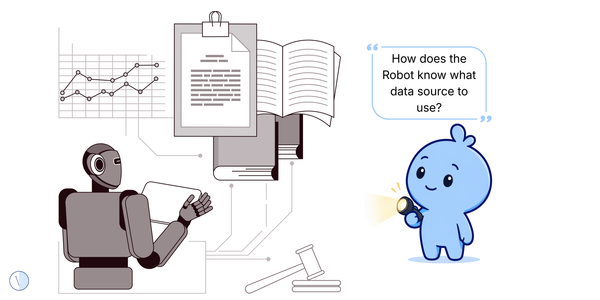
The basic problem is simple: people do not only fear AI, they get nervous around vague change. If the company cannot explain what work changes, what remains human, what is measured and who decides, the nicest communication plan in the world still feels like fog with a new branding.
The pattern
AI anxiety usually forms in the gap between technology talk and work reality. The organisation says 'transformation,' the worker hears 'what happens to my task, my skill, my team, my promotion path and my job?' A good conversation does not overpromise safety or hype, it makes the work visible enough for people to respond like adults.
The check
Do not begin with 'we are adopting AI,' begin with the work people recognise: reports, tickets, reconciliations, customer replies, meeting notes, analysis, planning, scheduling. For example, instead of saying 'AI will improve productivity,' say 'AI may help draft the weekly status note, but the manager still decides what is true and what gets escalated.'
Most jobs are generally bundled into numerous tasks. A role may include writing, checking, deciding, explaining, coordinating and handling exceptions. AI may touch one task without replacing the whole job. Use a simple table: task, AI role, human role, risk, learning value. This avoids telling people a job is safe while quietly removing the work that helps them grow.
People listen for loss, that means you should also name what remains human. For example: 'The tool can draft the first response, but humans still approve sensitive replies, handle exceptions, own customer judgement and decide when the draft is wrong.' Stability matters, not everything needs to sound like a revolution to be useful.
Anxiety grows when decision rights are invisible. Who decides which tasks get automated? Who decides whether headcount changes? Who decides what good AI use looks like? If the answer is 'leadership is reviewing options,' say that plainly. Pretending decisions are settled when they are not makes trust fall through the floor.
If AI use will be tracked, say so. If productivity will be measured differently, say so. If nobody knows yet, say that too. People worry when a new tool appears and a dashboard follows it. A simple sentence helps: 'We will measure cycle time and quality, not just how many prompts people type.'
Training cannot just be a link to a portal and one webinar with 400 people. Show the support pattern: office hours, example prompts, task-specific walkthroughs, escalation path, manager coaching and safe practice space. For a payroll team, a useful example beats a generic 'AI fundamentals' course every time.
The best questions are often the ones people are nervous to ask: 'Will this affect hiring?', 'Will my work be scored?', 'Can I refuse the tool?', 'What if the AI is wrong?' Give those questions somewhere to go, anonymous channels help, but only if answers actually come back.
Do not treat the first communication as the end. After 30 or 45 days, ask what has changed. What became easier? What became more confusing? What work moved to humans? What quality issues appeared? Real adoption teaches things the launch email could not know. The first message should open the loop, not close it.
What good looks like
A good AI anxiety conversation makes people feel less like passengers and more like participants. They may still be cautious, but they know what is changing, what is unknown, how to ask questions and where the next update will come from.
What to do next
Pick one role or team and run a 30-minute task map. List the work they do today, mark where AI may assist, and write down the questions that remain unresolved. That becomes the first useful communication.
The Satire
If the AI announcement says 'people are our greatest asset' but nobody can say what the people will actually be doing, the asset may be checking external job vacancies.
Related Vieews paths
Guides are practical checks. Signals show the pattern. Playbooks hold the heavier structure when needed.
Signal
AI Fear Is Often Work-Design Uncertainty
The pattern behind the guide.
Guide
Job Panic Work Map
Use when the conversation needs to move from fear to actual tasks.
Playbook
Human + Agent Team Design
Use the heavier structure when roles and AI responsibilities need formal design.
Useful context
This Guide is linked to current AI work conversations: worker anxiety, AI investment, ROI pressure, compute cost, and the growing gap between AI headlines and day-to-day work.
These are Vieews, not bibles, use as basic lenses, not prediction, legal advice, investment advice, HR advice, or a replacement for doing your own investigation. If a line makes the spreadsheet uncomfortable, excellent, ask one more question, tug on that thread (don't get fired!).