Signal: Savings Number before Work-Benefit Mapping
A savings number without a work map is not value, check that it is not a wish with a currency symbol. Savings only become real when work changes, cost changes, revenue changes, quality changes, risk changes or time is genuinely freed and reused.

Savings-Before-Work-Mapping Is PowerPoint Value
A savings target can look serious long before the work change benefits are understood.
A savings number without a work map is not value, check that it is not a wish with a currency symbol.
What showed up
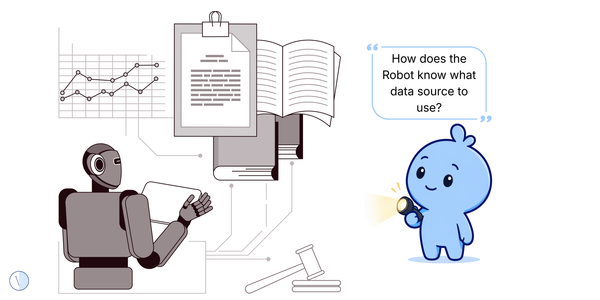
AI savings targets are appearing inside business cases, transformation plans and leadership decks. The numbers often arrive early because they help secure attention, funding and urgency. The awkward part is that the map of the actual work being benefitted can arrive later, sometimes much later, occasionally wearing a fake moustache.
Why it matters
Savings only become real when work changes, cost changes, revenue changes, quality changes, risk changes or time is genuinely freed and reused. Until then, the number may be useful as a target, but it is not yet proof. There needs to be a route from current work to changed work to recognised value.
The pattern
The pattern of announcing savings-before-work-mapping is becoming apparent. Leaders and Investors need a target number, so the number may appear. Operational Teams then work backwards to find use cases that might justify the numbers. That is not automatically wrong, but it creates pressure to count benefits before the work has been thoroughly understood, redesigned, adopted, supported and recognised by the Financials.
Where this shows up in everyday work
- A department announces AI savings but the same people still run the same process, attend the same meetings and check the same exceptions (or even more with AI bolt ons).
- A use case claims time savings, but nobody knows whether that time becomes lower cost, more output, better quality or simply more calendar meetings.
- A project counts hours saved across 200 people, but each person saves six minutes in a way that cannot be gathered, reused or removed.
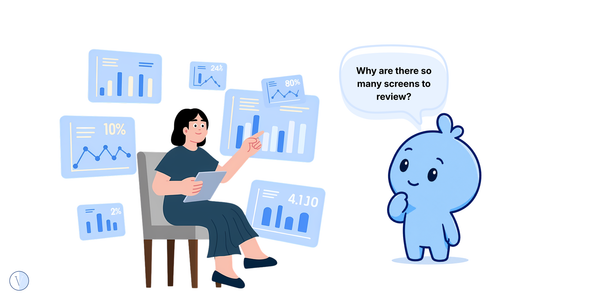
- A benefits deck says 'efficiency' while the team quietly adds reviewers, governance meetings and another tracker to manage the AI inputs and outputs.
What to watch before it becomes another programme
- Watch for savings described before the baseline is agreed.
- Watch for gross savings being presented as net savings before new costs are added.
- Watch for hours saved being treated as cash without asking what happens to the time.
- Watch for AI benefits counted by the project team but not recognised by Finance.
The Satire
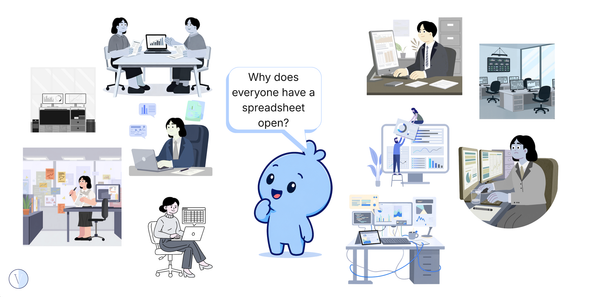
The slide said $50M savings but the process really is 'new tab in Excel,' called 'Use Cases'.
Related Vieews paths
Signals pull the thread. Guides help check it. Playbooks hold the heavier structure when needed.
Signal
Savings-Before-Work-Mapping Is PowerPoint Value
Vieews follows the pattern when the savings number arrives before the work map.
Guide
AI Savings Reality Check
A check for AI savings claims before they become official folklore.
Playbook
AI Value Ledger
Use the heavier structure when value needs a receipt trail.
Useful context
This Signal uses current AI work and capital-market reporting as context. The point is not to predict one outcome. The point is to notice the pattern before the pattern becomes another expensive slide.
These are Vieews, not bibles, use as basic lenses, not prediction, legal advice, investment advice, HR advice, or a replacement for doing your own investigation. If a line makes the spreadsheet uncomfortable, excellent, ask one more question, tug on that thread (don't get fired!).