Guide: AI Infrastructure Narrative Check
This guide helps readers test whether an AI infrastructure story has real substance or is mainly a dotted line from an existing business to a hot or hype market as AI demand is pulling more industries into the same story.

AI Infrastructure Narrative Check
A simple check for when a company says it is now part of the AI infrastructure boom and everyone nods a little too quickly.
Before calling it AI infrastructure, check what part of the stack is actually new.
What this guide helps with
This guide helps readers test whether an AI infrastructure story has real substance or is mainly a dotted line from an existing business to a hot market. It works for energy, utilities, cooling, construction, data centres, software vendors, finance and anyone else suddenly appearing near AI.
Why now
AI demand is pulling more industries into the same story. That can be legitimate: models need power, chips, buildings, networks, cooling and capital, are all a part of the story. But the label risks stretching until every company with a plug, pipe, cable or spare warehouse becomes “AI infrastructure”.
The pattern
The pattern is narrative expansion. A company starts with a normal business, finds a link to AI demand, adds the link to the deck, then waits to see if the market rewards the new framing. The useful check is whether the link changes the economics, not whether the slide is exciting.
The check
Do not accept “we are AI infrastructure” as one lump. Ask which layer the company actually touches: power, land, grid connection, cooling, data-centre construction, chips, cloud hosting, security, networking or finance. A utility and a chip supplier can both support AI, but the risks, margins and proof points are completely different.
A company can sell the same thing to a hotter customer and still deserve attention, but the demand should be visible. Look for signed contracts, capacity reservations, credible customer pipelines or measurable usage. If the story is only “AI will need what we already sell”, the narrative may be early, not proven.
If an energy company sells power, AI may be a new customer segment rather than a new business model. That can still matter. The question is whether AI demand changes pricing power, utilisation, capital needs, margins or risk. If nothing changes except the wording, the AI story may be mostly packaging.
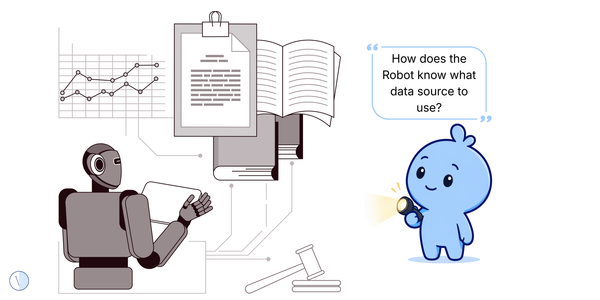
Every AI infrastructure story should reveal a scarce input. Is it grid access, land, transformers, GPUs, cooling, water, permits, construction speed or financing? If no bottleneck exists, the company may not have a meaningful advantage. If the bottleneck is real, the next question is who controls it and who pays.
Infrastructure does not live inside a pitch deck. It lands somewhere: a town, grid region, water system, road network or energy market. The AI story may look global, but the costs can be local, so ask who sees higher bills, noise, land pressure, water stress or planning disputes.
AI demand can move faster than infrastructure can be built. Power connections, permits, cooling systems and construction timelines may not match the growth story. A good narrative says when capacity arrives, but a weak narrative sounds like the future is already installed and waiting politely in a warehouse.
Owning an input is not the same as delivering infrastructure at scale. Ask whether the company has the people, capital, partnerships, permitting skill and operational discipline to turn AI demand into reliable service. A hot market does not automatically upgrade execution capability.
Take the AI words out and restate the company’s business. If it still sounds compelling, there may be substance. If it suddenly sounds ordinary, the AI label may be carrying too much weight. This is not cynicism, it is label hygiene.
Quick examples
| Situation | Better question |
|---|---|
| An oil or gas company adds AI to the investor deck | Ask whether AI changes the company’s actual revenue mix, or whether it simply gives an old energy story a newer customer angle. |
| A utility talks about AI demand | Ask where the new power will come from, who funds grid upgrades, and whether customers will see higher costs. |
| A cooling company becomes AI-adjacent | Ask whether AI workloads require different cooling, higher density, new contracts or just a more exciting brochure. |
| A landlord markets data-centre land | Ask whether the site has power, permits, fibre and realistic timelines, not just a large rectangle on a map. |
The Satire
Every gold rush creates miners, it also creates a surprising number of people selling maps.
Related Vieews paths
Chaos scenes spot the contradiction. Signals name it. Guides give you the next simple move.
Chaos
The Blue Blob and the AI Energy Slide
The discovery scene that started this thread.
Signal
AI Is Rediscovering Electricity
Use the signal when you want the pattern named clearly.
Playbook
AI Value Ledger
Use the heavier structure when you need the deeper lens.
Useful context
AI infrastructure stories can be real. The goal is not to mock every adjacency. The goal is to stop the word “AI” from doing all the work by itself.
These are Vieews, not bibles, use as basic lenses, not prediction, investment advice, or a replacement for doing your own investigation. If a line makes the spreadsheet uncomfortable, excellent, ask one more question, tug on that thread (don't get fired!).