Playbook: Context Map; Source of Truth Before AI
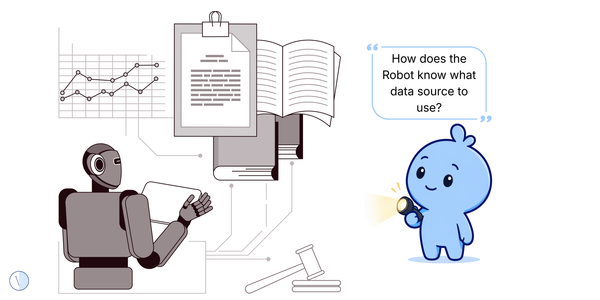
The question is not only “which model should we use?” It should ask: what does the AI know, where did it get that knowledge, and who says that source is allowed to guide the work?

Context Map: Source of Truth Before AI
What your AI is reading, what it can trust, and what needs fixing before it answers or acts.
A model can be strong and still give weak answers if the enterprise context is messy.
The question is not only “which model should we use?” It is: what does the AI know, where did it get that knowledge, and who says that source is allowed to guide the work?
How this connects to the sequence
Agent or Not? helped classify the workflow. Platform Agents Don’t Equal an Operating Model showed why platform rollout needs one neutral spine.
This playbook asks: what is the source of truth before the AI answers or acts?
Signal corner: The agent may be smart. Your source of truth may not be.
Read the related Signal: The agent may be smart. Your source of truth may not be.
Use this when...
- an AI answer depends on documents, policies, process notes, tickets, manuals, ERP data, CRM data, or SharePoint sites;
- teams are getting different answers from different agents;
- training content is heavy on screenshots and light on structured explanation;
- the business cannot say which source is official;
- an agent is being connected to several systems without a source-of-truth map;
- users trust the output because it sounds fluent, not because the source is known.
What counts as context?
Documents
Training notes, SOPs, manuals, playbooks, policies.
Systems
ERP, CRM, PLM, CMMS, HRIS, ticketing, service platforms.
Data
Master data, transactions, status fields, pricing, contracts.
Tribal knowledge
What people know but have not written down well enough for AI to use.
The context map
| Layer | Operator question |
|---|---|
| Business question | What question or workflow is the AI supporting? |
| Allowed sources | What may it read? |
| Authoritative source | Which source wins when sources conflict? |
| Excluded sources | What must it ignore? |
| Owner | Who owns source quality and freshness? |
| Refresh cycle | How often is this source updated? |
| Access boundary | Who can see what? |
| Output boundary | Can it answer, cite, draft, recommend, or trigger? |
Field example: ERP training assistant
A training assistant can answer user questions against ERP rollout material. But if most training is screenshots, different functions use different templates, and the best blueprint lives in one location’s SharePoint, the agent will expose the documentation debt.
The fix is not only “better prompting.” The fix is source-of-truth discipline: structured content, named owners, freshness rules, exclusions, and escalation paths.
Common failure modes
- AI reads an old policy because it was easiest to access.
- One site’s documentation becomes the accidental global blueprint.
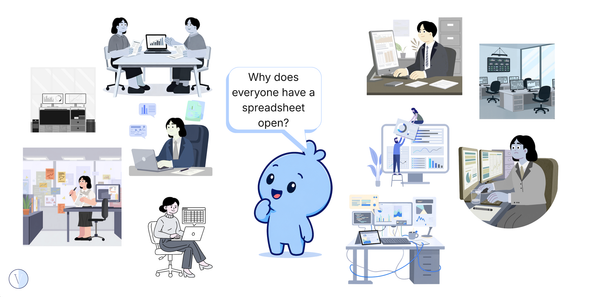
- Local spreadsheets override official systems without anyone noticing.
- Screenshot-heavy training notes force the agent to infer what should have been written.
- Permission boundaries are assumed rather than tested.
- Outputs sound correct but cannot be traced back to a source.
The first move
Pick one AI workflow. Map the top 5 to 10 sources it uses or should use. For each source, capture: owner, freshness, access rules, conflicts, and whether it is allowed to guide answers.
If you cannot name the source of truth, do not let the AI act on it yet.
Download the Context Map tools
Free members can download the Context Map companion sheet, editable workbook, and full pack.
Get the free-member downloads