Guide: Legacy Vendor Rebrand Reviews
A mature enterprise vendor known for databases, applications and old corporate systems now speaks loudly about AI infrastructure. This guide helps teams review vendor rebrands without becoming cynical or starry-eyed.

Legacy Vendor Rebrand Guide
A simple guide for checking whether a vendor’s new AI story helps your work or simply makes the old invoice look younger.
When a legacy vendor gets a new AI story, ask what changed for your work, not only what changed in the keynote.
What this guide helps with
This guide helps teams review vendor rebrands without becoming cynical or starry-eyed. It is useful when a familiar supplier starts talking about AI infrastructure, agents, data platforms or a new future category while your teams still use its older systems every day.
Why now
AI infrastructure is pulling mature vendors into new territory, while this may create real value, it can also creates confusion. A company can be a database vendor, cloud vendor, infrastructure vendor and AI vendor in the same sentence. Buyers now need much simpler questions to be answered.
The pattern
The pattern is the old layer wearing new cloaks i.e. the vendor may genuinely have new capability, but the customer still has to understand which layer is being sold, which layer is being fixed and which layer is simply being renamed.
The check
Start with the simplest question: what can the vendor now do that it could not do before? If the answer is a real capability, good. If the answer is mainly a new event theme, new product label or new executive phrase, treat it as marketing until evidence arrives.
Your team may still be dealing with reporting issues, integration mess, old customisations or unclear ownership. A vendor’s AI infrastructure story might be impressive, but it may not touch that pain. Ask whether the new offer solves your real problem or simply sells a new layer beside it (sprawl alert).
Is the vendor selling applications, cloud hosting, AI infrastructure, model access, data services, agents, consulting or a bundled promise? Each layer creates different costs and dependencies. If the vendor says it does everything, write down which part you actually need before the bundle becomes a fog machine.
A rebrand can hide a migration path. Ask whether adopting the new AI layer makes it easier to leave, harder to leave, cheaper to run, or more dependent on one supplier. Lock-in is not always bad, but accidental lock-in is a very expensive surprise wearing a roadmap badge.
Where does the vendor make money from the new story: licence uplift, cloud usage, data-centre capacity, services, migration support, training, premium AI features or long-term infrastructure contracts? Understanding the revenue model helps you understand what the vendor will keep pushing after the keynote ends.
If the new layer is genuinely useful, it should help remove something: a manual process, duplicate tool, old report, painful integration or support burden. If it only adds more work without retiring anything, the rebrand may be expanding the layer cake instead of improving it.
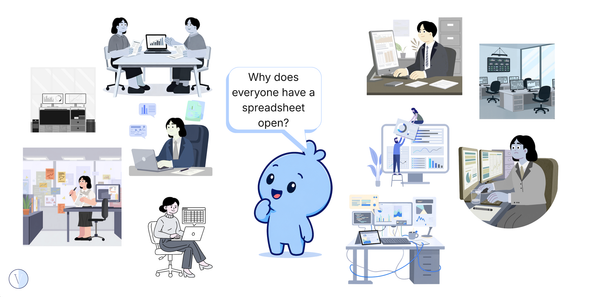
Vendor demos are usually house-trained. Ask for proof using your data, your controls, your messy users and your actual workflow. A tool that performs beautifully in the demo environment may still struggle with local exceptions, access rules, reporting habits and the sacred spreadsheet nobody admits owns the process.
Before signing, explain the purchase without vendor language. For example: “We are buying this because it reduces reporting rework by 30%” is stronger than “We are accelerating AI-enabled enterprise transformation.” If the plain-English reason is weak, the buying case probably needs more work.
Quick examples
| Situation | Better question |
|---|---|
| A database vendor sells AI infrastructure | Ask whether you are buying compute capacity, data integration, model access, application features or a story that bundles all four. |
| A long-term ERP supplier launches agents | Ask which old workflow becomes easier and which new supervision work appears. Agents rarely arrive without admin. |
| A vendor promises AI-ready transformation | Ask what data, ownership, process and support must already be true inside your company before the promise can work. |
| A product is renamed with AI | Ask whether the actual user experience changed, or whether the same workflow now has a more confident badge. |
The Satire
It's amazing what a keynote can accomplish without touching production.
Related Vieews paths
Chaos scenes spot the contradiction. Signals name it. Guides give you the next simple move.
Chaos
The Blue Blob and the AI Landlord Hat
The discovery scene that started this thread.
Signal
ERP Uncle Wants AI Landlord Energy
Use the signal when you want the pattern named clearly.
Playbook
Readiness Gate
Use the heavier structure when you need the deeper lens.
Useful context
This guide is not anti-vendor. Vendors evolve because markets evolve. The aim is to help buyers stay awake during the rebrand and ask whether the new story improves the work they actually have.
These are Vieews, not bibles, use as basic lenses, not prediction, investment advice, or a replacement for doing your own investigation. If a line makes the spreadsheet uncomfortable, excellent, ask one more question, tug on that thread (don't get fired!).