Guide: Before-You-Prompt Checklist
This checklist acts as an intervention for AI's overconfident answers, to help AI discover more context. This turns AI from a fast answer machine into a more careful work partner.

Precondition Prompt Guide
A lightweight way to make AI pause, ask better questions and stop generating confident fog when the work is not ready.
Before the AI answers, make it check what must be true first.
Use this when
Use this when you are asking AI to estimate, summarise, compare, draft, recommend, calculate or make sense of something where missing context could change the answer.
The basic problem
AI can be too helpful, it often tries to answer from what is available instead of asking whether the available information is enough for the task.
The pattern
The useful move is to put a small gate before the answer to check purpose, source, scope, audience, constraints and missing inputs. This turns AI from a fast answer machine into a more careful work partner.
The check
Tell the AI what the answer is for. An example: “I need this for a finance review, not a casual brainstorm.” Purpose changes tone, detail, caution and evidence. Without purpose, the AI may give a general answer to a specific problem and make it sound more useful than it is.
Say who will read or use the output. For example: “This is for warehouse supervisors, not the executive committee” because a good answer for one audience can be useless for another. Audience changes language, examples, risk level, length and what assumptions must be made visible.
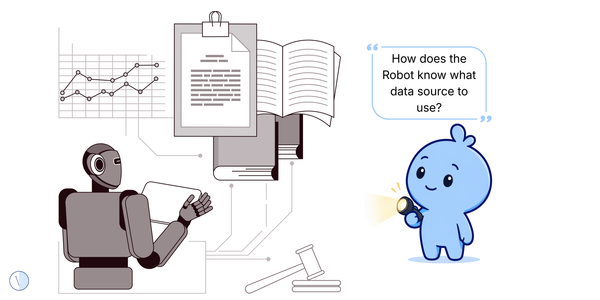
Tell the AI what information to use and what not to use. Example: “Use only the attached policy and do not infer from general employment law.” Without source boundaries, the answer may blend your actual material with plausible general knowledge which is where confident fog begins.
Give the boundary of the work, for example: “Cover US employees only, permanent staff only, effective from July 2026.” Scope stops the answer from quietly expanding or becoming irrelevant. Many wrong answers are not stupid; they are answering a bigger, older or different question than the one you meant.
Before the answer, require a missing-input check. Example: “Before answering, list up to five missing details that could change the result.” This simple step can prevent a polished wrong answer. If nothing important is missing, the AI can proceed with more confidence.
Ask the AI to write assumptions separately. Example: “Assume the baseline year is 2025 and adoption reaches 60%, unless I say otherwise.” Visible assumptions are easier to challenge while hidden assumptions are how a helpful answer becomes a secret little strategy document.
Tell the AI when not to answer, for example: “If the dataset, date range or business goal is missing, ask questions instead of estimating.” This is crucial for numbers, legal-ish text, HR decisions, procurement, customer commitments or anything that could get copied into a slide.
Request a simple confidence level and why. Example: “High confidence because source is complete,” or “low confidence because baseline is missing.” The point is not to make the AI nervous. The point is to stop uncertainty dressing up as a finished paragraph.
After the answer, ask: “What could make this wrong? What should I verify? What would change your answer?” These questions keep the human in the thinking loop and they also make the AI reveal the weak spots instead of letting them hide under smooth language.
What good looks like
Good looks like an AI answer that shows its inputs, assumptions, gaps and confidence before anyone copies it into a decision, email, report or meeting pack.
What to do next
Try this starter line: “Before answering, check whether you have enough context. If not, ask up to three questions. If you proceed, list assumptions separately.”
The Satire
A revolutionary concept: making AI think before it speaks.
Related Vieews paths
Guides are practical checks. Signals show the pattern. Playbooks hold the heavier structure when needed.
Chaos
The Blue Blob and the Helpful Answer
The discovery scene that started this thread.
Signal
Answer-First AI Is Risky For Work
The pattern behind this guide.
Playbook
Context Map
Use the heavier structure when needed.
Useful context
A helpful answer can still be early. In everyday work, missing context is not a minor detail; it can change the answer, the owner, the risk and the next step.
These are Vieews, not bibles, use as basic lenses, not prediction, investment advice, or a replacement for doing your own investigation. If a line makes the spreadsheet uncomfortable, excellent, ask one more question, tug on that thread (don't get fired!).