Signal: Dashboard Sprawl Is Operational Fragmentation
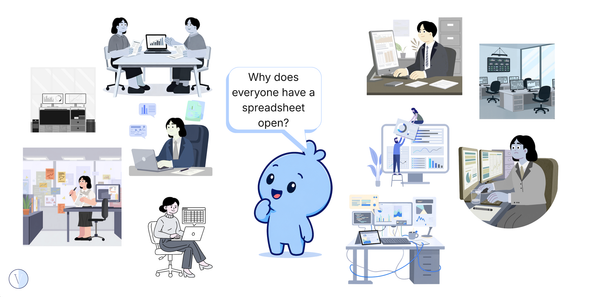
Digital work produces dashboards because every function wants visibility. AI will make this variation louder because it can generate more analysis faster than teams can decide which source wins.
Signal: Dashboard Sprawl Is Operational Fragmentation
Vieews translates AI, digitisation, and work noise into the operational question underneath.
Signal detected
Dashboard sprawl is rarely a visualisation problem
Why this is showing up now
Digital work keeps producing dashboards because every function wants visibility, but few organisations maintain dashboard ownership as a managed asset. AI will make this louder because it can generate more analysis faster than teams can decide which source wins.
Operator translation
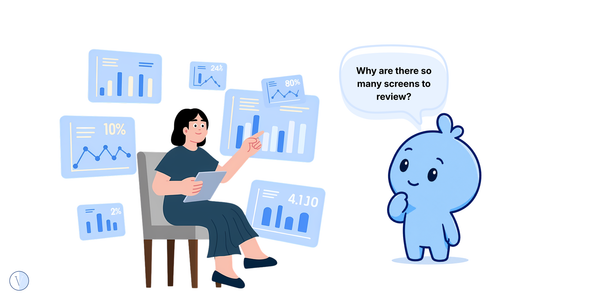
Dashboard sprawl is rarely a visualisation problem. It is usually a source-of-truth, ownership, decision-rights, and maintenance problem wearing charts.
Where this shows up in everyday work
- One team presents revenue by region from finance data while another uses CRM data and both call it performance.
- Executives ask for one version of the truth, but nobody wants to retire their local view.
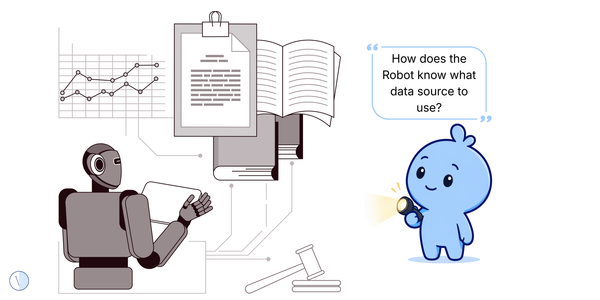
- AI summaries pull from whichever dashboard was easiest to access, not necessarily the one the business trusts.
What to watch before it becomes another programme
- No named dashboard owner.
- Same metric, different numbers, no resolution path.
- Dashboards used for decisions even after the source changed.
- AI tools summarising dashboards without knowing which source is authoritative.
Vieews paths
Use the lighter Guide if you need a practical next move. Use the Playbook if the work has become important enough to structure.
Chaos
Why Are There 5 Dashboards?
The discovery scene that opened the thread.
Guide
Guide: Clean Up Dashboard Sprawl Without Starting a Dashboard War
The lighter practical move attached to this signal.
Playbook
Digital Work Portfolio
The deeper system for when this becomes recurring work.
Source stack
Signals are grounded in public sources, then translated into the Operator layer.
The scenarios in The Chaos are relatable narrations of organisational workplace patterns; details are illustrative and not references to any specific employer, client, person, or live incident.