Signal: ERP Knows When Not To Proceed, AI Often Does Not
Sometimes the smarter system is the one that knows when not to continue. Work often depends on preconditions, if those pieces are missing, the answer may not be ready.

ERP Knows When Not To Proceed, AI Often Does Not.
Old enterprise systems can be painfully strict while that strictness may be annoying, but it also contains a lesson for AI.
Sometimes the smarter system is the one that knows when not to continue.
What showed up
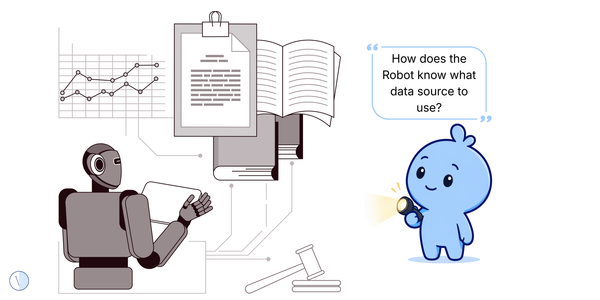
One screen refuses to proceed because a required field is missing, another screen continues with an answer because it can still generate text. Both behaviours are familiar but today the old system feels rigid, while the new system feels helpful. The real question is what happens when helpful moves faster than readiness.
Why it matters
Work often depends on preconditions: cost centre, owner, approval, baseline, date range, source, customer, product, policy version. If those pieces are missing, the answer may not be ready. AI can still be useful, but it still requires systems' discipline for deterministic outcomes.
The pattern
The pattern is precondition awareness: ERP systems often stop because a required input is missing, AI systems often continue because generating a response is always possible. For everyday work, possible is not always ready or useful. The future may need AI that can pause, ask and refuse (politely of course).
Where this shows up in everyday work
- Finance cannot post a transaction without the right cost centre, but AI may estimate savings with no baseline.
- Procurement cannot raise an order without a supplier, but AI may recommend vendors without checking master data quality.
- HR systems require effective dates, but AI may summarise policy without asking which country or employee group applies.
- A project workflow blocks missing approval, but AI may draft the decision note before the decision exists.
What to watch before it becomes another programme
- Watch for AI tools that produce answers without checking required fields.
- Watch for people treating AI fluency as readiness.
- Check whether the AI knows what information is mandatory versus optional.
- Ask whether the workflow has a stop rule, not just a prompt.
- Be careful when the AI answer bypasses controls the old system was built to enforce.
The Satire
The ERP asked for a cost centre while the AI asked for nothing. Guess which one got called "helpful."
Related Vieews paths
Signals pull the thread. Guides help check it. Playbooks hold the heavier structure when needed.
Chaos
The Blue Blob and the Very Strict ERP
The discovery scene that started this thread.
Guide
ERP Lessons For AI
Turn the pattern into a practical check.
Playbook
Readiness Gate
Use the heavier structure when needed.
Useful context
Old systems can be annoying because they stop the work. New systems can be risky because they keep going. The interesting bit is not which one is better; it is what each system understands about readiness.
These are Vieews, not bibles, use as basic lenses, not prediction, investment advice, or a replacement for doing your own investigation. If a line makes the spreadsheet uncomfortable, excellent, ask one more question, tug on that thread (don't get fired!).