Playbook: Quiet Decommissioning of Zombie Pilot
AI pilots often fail quietly because of its artificial intelligence. They may not be scaling, but they also do not die. They will keep consuming tools, attention, data access, and trust.

Quiet Decommissioning: Retire AI Pilots Before They Become Zombie Pilot Spend
Use this playbook to retire weak AI pilots, duplicate workflows, stale agents, and low-value automations cleanly.
In plain English
AI pilots often fail quietly because of its artificial intelligence. They may not be scaling, but they also do not die. They will keep consuming tools, attention, data access, and trust.
As more platforms deploy agents, enterprises will accumulate more half-live AI work. Decommissioning is not failure. It is portfolio hygiene.
How this connects to the sequence
The Value Ledger tells you what value exists. Quiet Decommissioning tells you what to do when value, ownership, usage, or safety is not enough.
Signal linked to this playbook
Zombie agents waste human attention
This Signal makes the hidden human cost visible: zombie agents keep asking people to maintain, explain, avoid, or work around systems that should have been retired.
Retire when
- No named owner remains.
- Usage is low or performative.
- Value is unproven or not bankable.
- The workflow duplicates another tool.
- Context is stale or unreliable.
- Risk is higher than the benefit.
- Support cost is hidden but real.
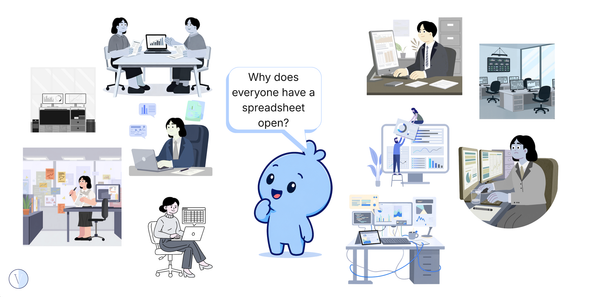
- Users have quietly gone back to spreadsheets, email, or old tools.
Use this when
- A pilot has been live for months with no decision.
- Nobody can explain whether it scaled, stopped, or changed anything.
- Different teams built overlapping copilots, automations, or agents.
- A tool is still connected to data but no longer actively managed.
- The team wants to stop something without political drama.
The decommissioning steps
- Freeze new expansion.
- Capture the original promise and current evidence.
- Check usage, value, risk, and owner status.
- Decide retire, merge, replace, or fix.
- Communicate the decision.
- Remove access, connectors, schedules, or automations.
- Archive lessons learned.
- Update the portfolio register.
What good looks like
- The organisation learns from the pilot.
- Data access is removed or reduced.
- Users know what replaces the workflow.
- The decision is visible in the digital work portfolio.
The first move
Find three AI pilots that have not had a scale decision in 90 days. Ask: owner, usage, value, risk, replacement. If two or more are weak, schedule a retirement review.
Human work signal
Dead pilots waste more than money. They waste attention, create confusion, and reduce trust in future AI work.
What to capture in the worksheet
| # | Field | Why it matters |
|---|---|---|
| 1 | Pilot / workflow | Identifies the initiative under review. |
| 2 | Owner | Confirms accountability for the decision. |
| 3 | Usage signal | Indicates whether the solution is actively used. |
| 4 | Value evidence | Verifies that meaningful value is being delivered. |
| 5 | Risk status | Assesses whether risks remain acceptable. |
| 6 | Duplicate? | Identifies overlap with other tools or workflows. |
| 7 | Decision | Records whether to retire, merge, replace, or fix. |
| 8 | Retirement owner | Assigns responsibility for decommissioning activities. |
| 9 | Archive link | Preserves lessons learned and supporting records. |
| 10 | Follow-up date | Ensures actions are completed and reviewed. |
Get the lightweight workbook
The public playbook gives you the method. The member workbook gives you the simple working sheet across various Playbooks.