Guide: Human Review Rule Builder
Before calling AI supervised: Name the output; Name the reviewer; Define what they check; Match review to risk; Count review time.

Human Review Rule Builder
A practical guide for deciding when AI output needs human review, who reviews it and what the review is supposed to catch.
A human in the loop is not a plan until the human knows what they are checking.
What this guide helps with
This guide helps teams build simple human review rules for AI-assisted work. It is for managers, operators, QA leads, HR, legal, marketing, product, engineering and anyone tired of hearing “human oversight” without a practical method.
Why now
Many AI rollouts say a human will review the output. That sounds safe, but it is incomplete. Human review needs scope, time, authority and a clear checklist. Otherwise it becomes rubber-stamping with nicer language.
The pattern
The pattern is that “human in the loop” often hides the real work. The human may be checking facts, tone, compliance, assumptions, data boundaries, customer risk or final accountability. Each of those is a different review task.
The check
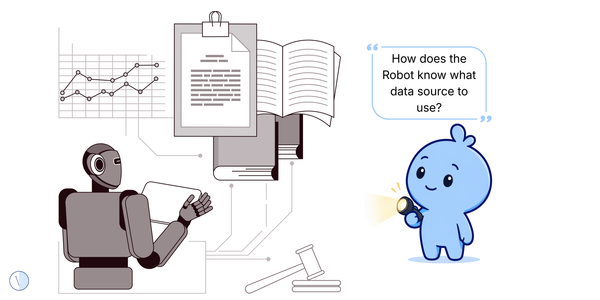
Start by naming the output. Is it a customer email, legal draft, spreadsheet formula, code change, HR note, meeting summary, policy text or data analysis? Review rules only work when they are tied to the type of output. A generic “review AI work” rule is too vague to protect anyone.
The reviewer should not be expected to check everything unless the work justifies it. List the review purpose: factual accuracy, tone, safety, data leakage, legal risk, brand voice, calculations, assumptions or completeness. This helps people know what “good enough to approve” means.
Not every AI output needs the same level of scrutiny. A rough internal brainstorm may only need light review. A customer-facing promise, financial claim or employee decision needs stronger review. Use low, medium and high review bands so people do not waste senior attention on tiny tasks.
A reviewer cannot approve what they cannot understand. If the AI used a dataset, source document, prompt or assumption, provide it. Otherwise the reviewer is only judging whether the output sounds plausible. That is not review. That is vibes with responsibility attached.
Review does not always mean ownership. Decide who is responsible for the final output: the AI user, the reviewer, the manager, the process owner or someone else. If nobody knows who owns the final answer, people will either over-review everything or approve too quickly to keep work moving.
If AI saves drafting time but creates review time, measure both. Review minutes are not free because the reviewer is human, paid and probably already busy. This is where AI Workload Waste becomes visible instead of hiding inside people’s calendars.
Early AI review rules will be imperfect. Track where reviewers keep finding errors, where review is too heavy and where people bypass the rule. Update the rule based on real use. The goal is enough review to trust the work, not enough review to recreate the whole task manually.
Quick examples
| Situation | Better question |
|---|---|
| AI writes a customer response | Check facts, tone, policy promises and whether a human owns the final message. |
| AI summarises a meeting | Check whether decisions, owners and unresolved questions are clearly separated. |
| AI drafts a policy | Check legal meaning, scope, exceptions, audience and whether people can apply it. |
| AI produces a spreadsheet analysis | Check dataset, formula assumptions, exclusions and whether the conclusion matches the numbers. |
The Satire
“Human in the loop” is not a control if the human is just there for emotional support.
Related Vieews paths
Chaos scenes spot the contradiction. Signals name it. Guides give you the next simple move.
Chaos
The Blue Blob and the Second Shadow
The discovery scene that started this thread.
Signal
Supervision Work Arrives First
The pattern behind this guide.
Playbook
AI Workload Waste Ledger
Use the heavier structure when needed.
Useful context
Use this guide to turn vague review language into a practical rule that people can follow without becoming full-time robot babysitters.
These are Vieews, not bibles. Use them as simple lenses, not legal advice, investment advice, HR advice or a replacement for doing your own investigation. If a line makes the spreadsheet uncomfortable, excellent. Ask one more question and tug on that thread.