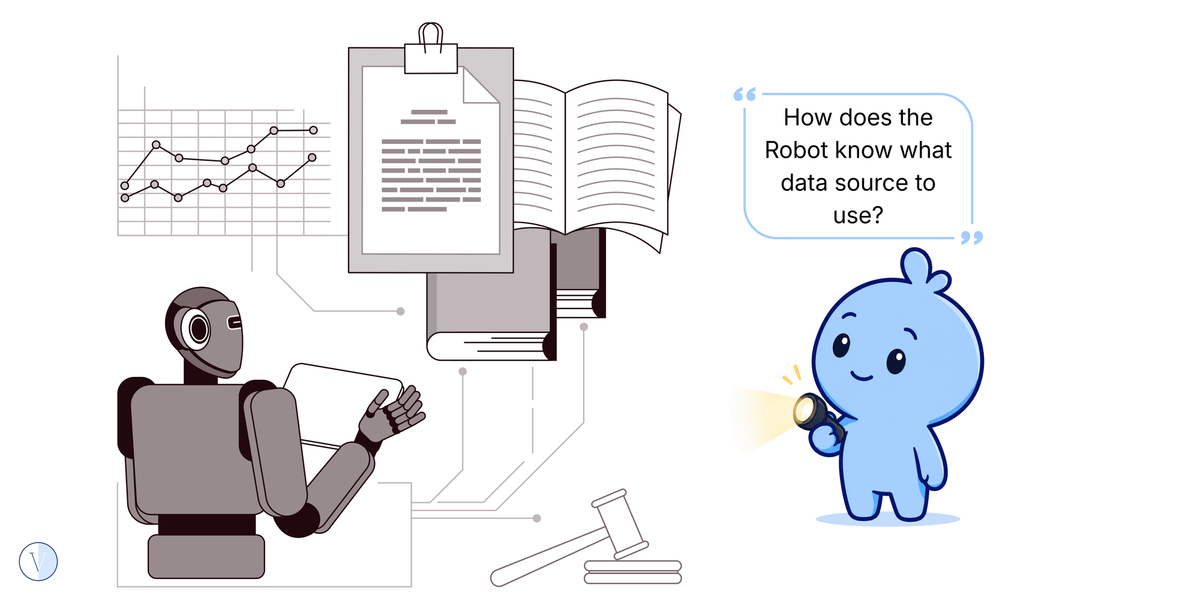
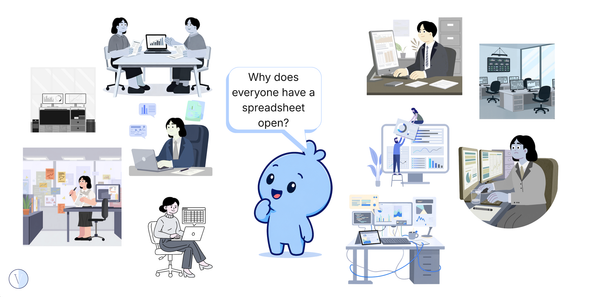
The official interface does not appear fitting the local job well enough, so the team has created a parallel representation it can actually use for reality.
We call this…
Shadow Excel Syndrome
A local spreadsheet that becomes an informal operational representation beside the official platform because the formal interface does not fit the work closely enough.
The four-part read
One pattern with four things worth noticing.
This is the same structure used across the VIEEWS pattern library to explain the impacts.
1
Understanding the gray zone
Recognition
The Process Map: Your company mandates a single, global cloud platform to handle all operations. Executive leadership looks at standardized charts, believing every office, regional desk, and operator is logging data identically into the centralized system.
The Reality: The official system interface may be over/under-engineered/customised, or slow, or requires redundant clicks for a basic entry, and fails to capture the unique, local realities of the daily workload.
The Signal: An operator or analyst quietly creates a local spreadsheet on their desktop to run their actual day-to-day tracking, while only retroactively inputting dashboard required data into the official platform to keep management happy.
2
The immediate shockwave
Impact
The Non-Existent Visibility: The true status of work-in-progress becomes opaque to line managers. The actual pipeline is moving inside an unmapped desktop file that no automated corporate reporting tool can scan.
The Strategic Conflict: Leadership is analyzing a neat corporate package on their dashboards, making major resource-allocation and operational decisions based on a a schema that isn't connected with the reality.
The Duplication Burden: The frontline worker is penalized with a stealth time tax—spending valuable energy maintaining their shadow tracking systems just to survive, alongside the administrative burden of feeding the official corporate database.
3
The hidden utility and why the Pattern persists
Benefits
The Tailored Testing Environment: It gives the operator a high-speed, low-friction workspace customized flawlessly to the explicit requirements of their micro-task. It eliminates system clutter/delay so they can focus on processing real work.
Survival Method: The Pattern restores the operational speed and flexibility required to hit targets on a shifting, potentially chaotic reality of work at all levels without waiting for a centralized corporate product sprint to update the main software UI.
Error Proofing/Validation: Pattern allows analysts to clean, format, and experiment with local operational representations safely in an offline environment before pushing anything into the high-risk, enterprise production system.
4
The long-term impact if left unmanaged
Carry-Over Debt
The Representation Debt: A massive, undocumented operational overhead already likely exists if this Pattern exists. The organization is forced to pay a constant manual reconciliation tax—spending expensive human hours arguing over discrepancies between the "shadow truth" and the "system truth."
The Audit/Security Risk: business data sits unstructured, unsecured, and unbacked-up on individual machines. A single local hardware failure or a human error in an unmanaged cell formula can silently wipe out or corrupt entire compliance workflows.
The Process Mismatch: When the shadow analyst is promoted or leaves, the customized local operational representation is lost. The team is left with a decision-making vacuum, a shattered workflow, and zero unwritten documentation to explain how the work was actually being executed.
AI Impact. AI can deepen the split if it sees only the official platform while humans work from the local file. Connecting AI to the shadow file may improve context while also increasing governance, integrity and dependency questions.
One thing to notice next
Take this back into the wild of your workplace.
Ask one team which file they would open first if they had to explain today’s real workload.
Behind the pattern
Same four lenses, every time.
Recognition, Impact, Benefits and Carry-Over Debt help us follow the gap between formal design and the work people actually build around it.
Recognition → Impact → Benefits → Carry-Over Debt
Deeper dives and toolkits coming soon.
For now, we are following the work, revealing the Patterns. Subscribe and share to explore next patterns.