Review Queue: Did AI Really Save Time Or Shift The Work?
Five quick questions and the detail behind it about what happens when content generation gets faster but human attention does not move at the same speed.
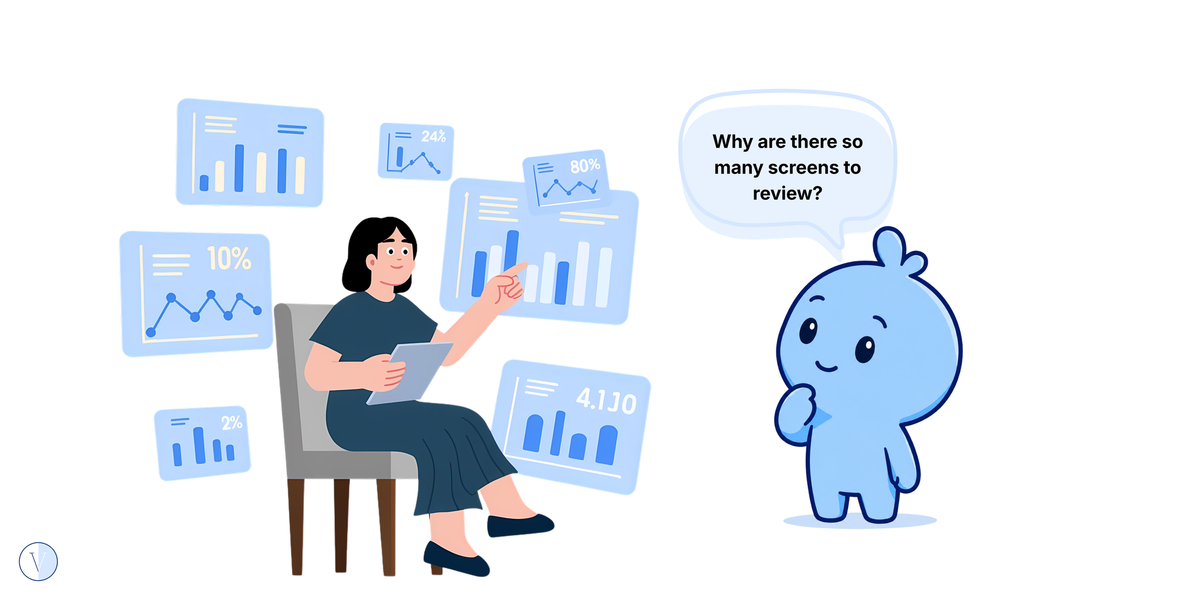
The machine is getting faster but the calendar is busier than ever.
Take five quick questions to see where the time actually went before we name the pattern.
Did AI save time or create new review queues for you?
Five quick questions, note, we’re not measuring AI maturity; we’re following the work.
When AI produces an output, what usually happens next?
Because AI creates more output, people are now reviewing more items than they used to.
How often does review work wait because the right person is busy?
“The AI did it in 30 seconds, but…”
Your main reviewer is away for a week. What happens?
Automation can accelerate creation without accelerating judgement.
Quality control, accountability, context and acceptance still take human attention. When production speeds up dramatically without enough guardrails, the next steps in the work move downstream into checking, correcting, integrating and approving what was produced. The productivity gain is not just the time taken to generate something; it depends on what has to happen before that output can safely be used.
Review Queue
A growing backlog of outputs created by fast technology, now increasingly AI, waiting for human judgement, correction, verification or approval after the creation step has been accelerated.
One pattern. Four things worth noticing.
This is the same lightweight analytical structure we use across the VIEEWS pattern library.
Recognition
Impact
Benefits
Carry-Over Debt
Take this back into the wild of your workplace.
Same four lenses, every time.
Recognition, Impact, Benefits and Carry-Over Debt are also the structure behind our ongoing book research into the Undefined Middle of work, the space between what organisations formally design and what humans actually build to make work move.
For now, we’re keeping the public pattern light and following what people recognise, share and ask to explore next.