Human API: Do You Have A Hidden Corporate Glue?
Five quick questions about the invisible human integration between systems, teams, rules knowledge, and exceptions.
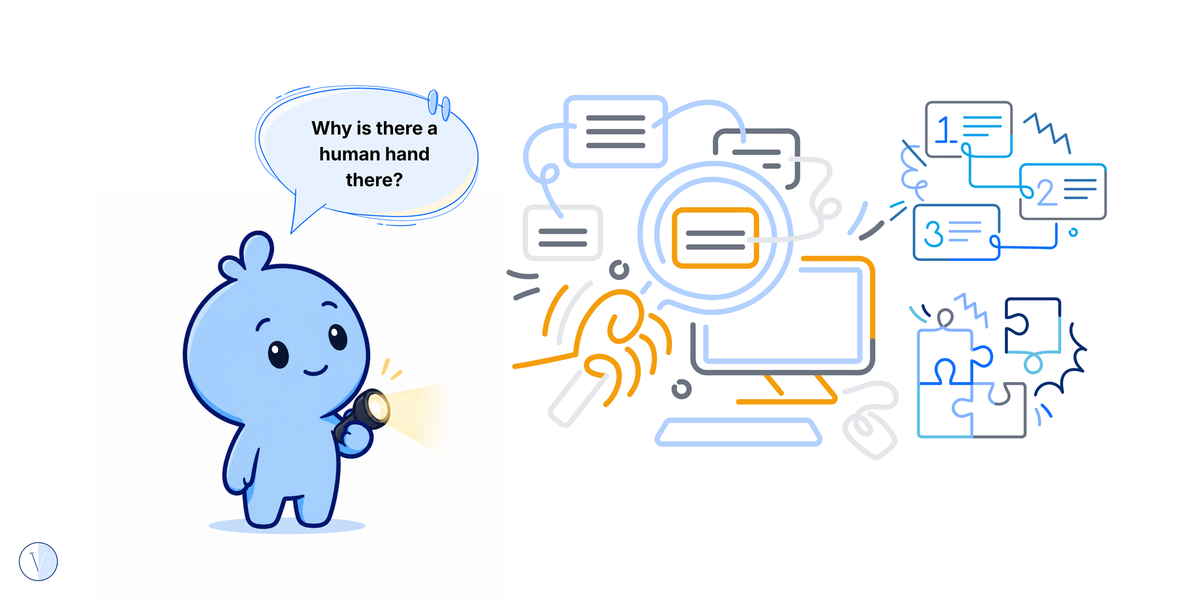
The process diagram looks clean but in reality one particular person always comes up before the workflow can be completed.
Take five quick questions to see whether the behaviour looks familiar.
How much does your organisation rely on “the person who just knows”?
Five quick questions; attempt to stay true to what actually happens in the workplace, not what the process map says.
When information needs to move between two systems or teams, what usually happens?
When the documented process stops working, there is someone who knows the workaround.
How often does someone need to make a judgement call that isn’t written down anywhere?
When a piece of work gets stuck, people are most likely to say…
That person is away for a week. What happens?
The actual workflow contains a human step the formal picture may not show.
Formal systems and processes rarely connect every piece of work cleanly. Sometimes a person fills the remaining gap by translating, reconciling, routing, remembering exceptions or applying judgement. The visible task may look manual, but the useful question is what that person is adding that the surrounding system does not.
Human API
A person who has quietly become part of the interface between systems, teams, rules or information that do not connect smoothly on their own.
One pattern. Four things worth noticing.
This is the same lightweight analytical structure we use across the VIEEWS pattern library.
Recognition
Impact
Benefits
Carry-Over Debt
Take this back into the wild of your workplace.
Same four lenses, every time.
Recognition, Impact, Benefits and Carry-Over Debt structure to explain how the work organises itself in the space between what organisations formally design and what humans actually build to make work move.
For now, we’re keeping the public pattern light and following what people recognise, share and ask to explore next.