Guide: Human-In-The Loop but Where Is the Work Waiting?
Small guide to check if your AI draft waits longer than the old manual draft. How much approval time is required for AI generated outputs?

Where Is the Work Waiting?
A simple approval workflow check for ensuring the waiting queue is visible after the fast AI or automated finished tasks.
The work may be finished quicker but the approval workflow remains the same.
What this Guide helps with
Use it when AI, automation or a faster way of working has sped up the task, but the finished output still waits for reviews, sign-offs or one unavailable decision-maker using the old systems.
Keep it small
Pick one real item, do not attempt to redesign the whole approval process today. Follow one piece of finished work and see where time to realisation actually sits.
The Pattern behind this Guide
The Approval Black Hole appears when completed work waits longer for a decision than it took to create.
The check
Choose something recent: an AI-drafted marketing text, purchase request, report, policy update, customer message, hiring decision or expense claim.
Record the moment the output was genuinely ready for a decision. This is the start of the waiting clock.
Write down each person, inbox, meeting, committee or system state the item entered before it could move and why.
For each stop, record how long the item waited. Separate active review time from time spent sitting untouched.
Did the reviewer catch a material issue, make a real decision or simply repeat a check someone else had already completed? Can these decisions be entered as part of the AI tool workflow?
If the work stops, search old emails or needs a new committee, the approval chain may also be carrying unclear delegation or key-person dependency.
Use this small log
| Approval stop | Why it exists | Wait time | What changed? |
|---|---|---|---|
| Team lead | Tone and completeness | 6 hours | Two wording edits |
| Risk | Policy check | 2 days | No change |
| Director | Final sign-off | 3 days | Approved as submitted |
Then ask: did the work become faster, or only the first step?
Where approval delays commonly hide
Quick examples
| What you see | Question to ask |
|---|---|
| An AI draft waits longer than the old manual draft | Which reviews are new, and which one owns the actual decision? |
| Every reviewer checks the whole output | Could the checks be divided by risk, authority or expertise? |
| Work stops when one approver is away | What delegation exists, and where is it documented? |
| Small and large decisions follow the same route | Should approval limits change with value, risk or reversibility? |
The Satire
The AI finished in 30 seconds but the approval queue requested 7 to 10 business days.
Field Note
The Blue Blob and the Transformation That Was Complete
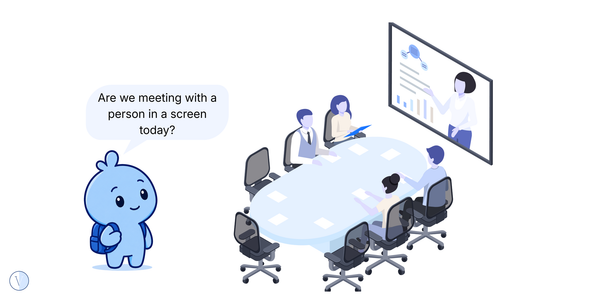
The room where several post-transformation activities uncovered the Patterns.
Pattern quiz
How Far Into the Approval Folklore Are You?
Five quick questions about sign-offs, queues and missing delegation.
More Patterns
Keep spotting what returns.
Explore more quizzes and the strange work hiding behind new technology.
Want the deeper version when it lands?
Deeper Insight and Toolkit coming soon, you don't want to miss it.
This is a lightweight Guide, not an organisational diagnosis, legal opinion or instruction to remove required controls. Some approvals exist for good reasons. The useful question is whether the reason, owner and decision right are still clear.