Guide: Source-of-Truth Check, Which Version Do People Actually Trust?
A simple check for confirming if you really have one source-of-truth. Follow one decision, report or number to see which version people actually use when it matters.

Which Version Do People Actually Trust?
A simple check for following one decision, report or number to see which version people actually use when it matters.
The official source may exist but the trusted source may be somewhere else.
What this Guide helps with
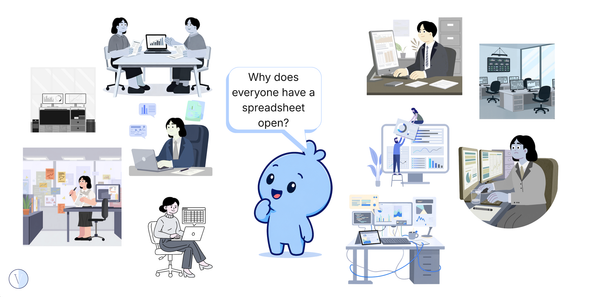
Use it when dashboards, ERP, CRM, Power BI, planning tools or reporting systems exist, but meetings still rely on spreadsheets, local extracts or one person’s workbook.
Keep it small
Pick one recurring decision, number or report. Start small, do not map the whole reporting landscape today. Follow one thing people actually use.
The Pattern behind this Guide
Shadow Excel Syndrome: this public Pattern post contains the quiz that leads into this Guide.
The check
Choose something that matters: forecast, margin, headcount, pipeline, order status, budget, inventory, a KPI, etc.
Record which system, dashboard or report is supposed to be authoritative.
Record what people actually open, quote or challenge in the meeting.
Look for manual adjustments, local formulas, timing differences, removed rows, renamed categories or hidden tabs.
Is it more current, more flexible, easier to inspect, easier to use, easier to explain or simply familiar?
If the decision stalls, the spreadsheet may be carrying hidden process knowledge.
Use this small log
| Decision / number | Official source | Trusted source | What changed? |
|---|---|---|---|
| Weekly forecast | ERP dashboard | Finance workbook | Manual phasing and comments |
| Headcount plan | HR system | Local tracker | Future starters added manually |
| Pipeline review | CRM dashboard | Sales spreadsheet | Deals grouped by local logic |
Where this commonly hides
Quick examples
| What you see | Question to ask |
|---|---|
| The dashboard and spreadsheet disagree | Which source is current, owned and explainable? |
| Everyone asks for the Excel after the meeting | What does the workbook contain that the system does not? |
| Only one person can explain the formulas | Is this a spreadsheet issue or a key-person dependency? |
| The spreadsheet has hidden tabs | Which decisions are being made outside the official system? |
The Satire
The new reporting system official name is ‘source of truth’, Excel is smiling from the shadows.
Field Note
The Blue Blob and the Finished Transformation
The room where the strange post-transformation clues appear.
Pattern quiz
The System Is Live. Why Is Everyone Still Trusting FINAL_v18.xlsx?
Five quick questions about Shadow Excel Syndrome energy.
More Patterns
Keep spotting what returns.
Browse more quizzes and the strange work hiding behind new technology.
Want the deeper version when it lands?
The deeper Shadow Excel Syndrome Insight and future Toolkit are coming later. Subscribe for the next Pattern drop.
This is a lightweight Guide, not an organisational diagnosis or instruction to remove required controls. Some manual steps, approvals, training supports or handoffs exist for valid reasons. The useful question is whether the reason, owner and failure point are still clear.